When to go, what time to visit the temples and where to find fewer crowds.
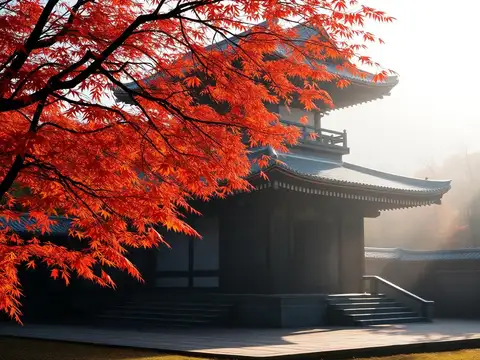
In November Kyoto changes colour. The temple maples turn red and orange, the gardens fill with leaves and the city fills with visitors. To enjoy the season you need three things: room in your dates, early starts and a plan for each area.
When the colours arrive
In Kyoto the maples usually peak between mid and late November. In recent years warm autumns have at times pushed the peak into early December. The mountain areas north of the city, such as Ōhara and Kurama, turn about a week before the centre.
From September, autumn colour (kōyō) forecasts are published in Japan and updated several times during the season. Check them, but don't bet everything on one date. Four nights in Kyoto, with day trips to Nara and Uji that can move depending on the weather and the colours, let you follow the maples instead of hoping they wait for you.
The opening times that matter
The famous sites are busy from mid-morning to late afternoon. The first trick is knowing when they open.
- Kiyomizu-dera opens at 6:00 all year round. Arrive early and the great wooden terrace is still almost empty.
- Fushimi Inari is always open and free to enter. At dawn the orange torii gates are deserted. Climbing to the top and back takes 2-3 hours; you reach the Yotsutsuji crossing, halfway up, in 30-45 minutes.
- Tōfuku-ji opens later: from mid-November to early December it is open from 8:30 to 16:30, with last entry at 16:00. Be there a few minutes before it opens.
Many temples close between 16:00 and 17:00, and in late November the sun sets just before 17:00. Always check the hours on the official website: they change from year to year.
Area by area
Northern Higashiyama is at its best in the afternoon. Eikan-dō is one of the most famous temples for maples, with a pond and slopes full of red. A few minutes' walk away is Nanzen-ji, with its great wooden gate and brick aqueduct. From there the Philosopher's Path follows a canal north to Ginkaku-ji: the walk is part of the visit, with small temples along the way.
The south is for the morning. Tōfuku-ji is one train stop from Kyoto Station, about 3 minutes on the JR Nara Line. The covered Tsūten-kyō bridge, over a valley of maples, is the busiest spot: on peak days stopping to take photos may be banned. You get a good view of the same valley from the nearby Gaun-kyō bridge. Fushimi Inari is the next stop: pair them in the same morning.
Arashiyama calls for the opposite of the centre: go at dawn. On the JR Sagano Line you reach Saga-Arashiyama Station in about 15 minutes from Kyoto. The bamboo grove and Togetsu-kyō bridge are quiet only in the first hours; the Tenryū-ji garden opens at 8:30. Travel by train, not by bus: in late November traffic slows the bus routes to Arashiyama and Higashiyama badly.
Ōhara and Kurama: fewer crowds, earlier colours
If you are looking for calmer corners, head up into the mountains to the north. They are not empty, especially at weekends, but they are quieter than the centre.
- Ōhara: subway to Kokusaikaikan, then a bus. About forty minutes in total, plus waiting time. In November Sanzen-in is open from 8:45 to 16:45. Little Raigō-in, deeper in the woods, is quieter still.
- Kurama and Kibune: the Eizan Line train leaves from Demachiyanagi and takes about 30 minutes. You can climb to Kurama temple and walk down the other side of the mountain to Kibune, along the stream. Some sections of the trail stayed closed for a long time after typhoons: check before you go.
Evening illuminations and crowds
From early November to early December several temples reopen in the evening with the maples lit up. Eikan-dō, for example, opens from 17:30 to 21:00 with a separate ticket; Kiyomizu-dera usually does so in the last ten days of November. They are beautiful but very busy: they are worth one night, not four. Two hours of queueing at night will cost you the dawn start the next morning.
Beyond that, a few rules:
- visit the most famous temples on weekdays and avoid weekends and Japanese public holidays (3 and 23 November);
- no more than two major temples a day;
- between temples, walk or take the train.
Where to stay and day trips to Nara and Uji
For four nights a central base works best, near Kyoto Station or between Shijō and Gion, with trains and the subway close by. A ryokan with a traditional dinner is worth one or two nights, but dinner is served at a fixed time, often early: that day, plan your visits so you are back by late afternoon. Since March 2026 Kyoto's accommodation tax is higher and rises with the room rate.
Nara is about 45 minutes away on the rapid train on the JR Nara Line. Uji, the town of green tea and Byōdō-in temple, is 17-30 minutes away. These are the two day trips to keep flexible: if it rains one day, or the colours in the city are not ready yet, move them there.
Book early. In maple season the best ryokan in Kyoto fill up many months ahead, and prices rise as November gets closer.
In short
- When: mid to late November, with room to stretch into early December.
- Nights: at least four in Kyoto.
- Mornings: Arashiyama, Tōfuku-ji, Fushimi Inari, Kiyomizu-dera.
- Afternoons: northern Higashiyama and the Philosopher's Path.
- Fewer crowds: Ōhara, Kurama and Kibune, on weekdays.
- Evenings: one illumination, just one.
Want a trip built like this? Tell us about it on a free call.
The Dream Destination editorial team