Four very different countries, how many days you need, where to sleep and how to choose.
First-time safari travellers almost always ask which country has the most animals. It is the wrong question: in all four you will usually see plenty. The useful question is a different one: what kind of days do you want between sightings?
Kenya and Tanzania: East Africa
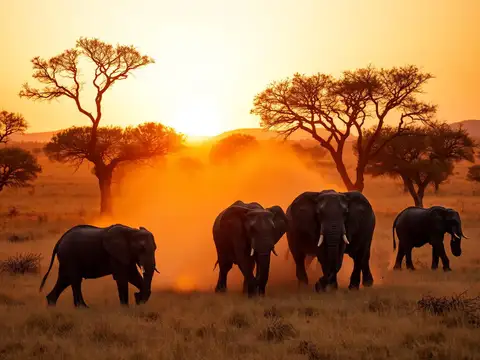
Kenya has the shortest learning curve. Distances between the Maasai Mara, Amboseli and the Rift Valley lakes are manageable, the camps are well established and, in the migration months, the amount of wildlife in the Mara is hard to match anywhere. Around the national reserve are the conservancies, private areas run together with Maasai landowners: fewer vehicles per sighting, and activities that are not allowed in the reserve, such as night drives and walks with an armed ranger.
Northern Tanzania offers more space in exchange for a little comfort. The Serengeti is vast, the Ngorongoro Crater is unlike anywhere else in Africa and the drives are longer. It rewards travellers with a few extra days who do not mind hours in a vehicle.
South Africa and Namibia: the south
South Africa is the easiest start for families. The Eastern Cape has private reserves in malaria-free areas, the roads are excellent and the trip can end in Cape Town. In Kruger, a low-risk malaria area, you can even self-drive a rental car, staying on the roads and getting back to camp before the gates close at sunset. In the neighbouring private reserves, such as Sabi Sand, guides can leave the track to follow animals and run drives after dark.
Namibia is the right choice when the landscape matters as much as the animals. In Etosha sightings gather around the waterholes, but what people take home is the dunes of Sossusvlei, the emptiness of Damaraland and the light. It is the most demanding of the four for distances, often on gravel roads, and the most rewarding to photograph.
For all four countries, check malaria, vaccinations and documents before you leave on viaggiaresicuri.it and with your doctor.
How many days you need
For a first safari, five to seven nights in the parks is a good measure. With fewer than four you spend more time on transfers than watching wildlife. Beyond eight, unless you are an enthusiast, the days start to blur.
Stay at least two nights per camp, ideally three. With one night you arrive in the afternoon, go out once and leave the next morning. Two or three different areas are enough: for example the Maasai Mara and Amboseli in Kenya, or Tarangire, Ngorongoro and the Serengeti in Tanzania.
The days follow a set rhythm. Up before dawn, a drive in the vehicle (the game drive) until mid-morning, lunch and a rest in the hot hours, then a second drive from the afternoon until sunset. Plan for it: this is not a holiday for sleeping in.
Tented camp or lodge, private or shared vehicle
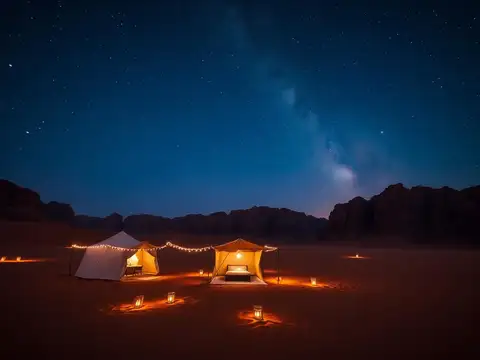
A tented camp is a large, permanent tent with real beds and a private bathroom, often with a hot shower. At night you hear the animals around you, and that is exactly the point. Some camps are seasonal and move to follow the migration. A lodge is a solid building, with more facilities and usually more rooms. With young children, or if you sleep badly, a lodge often feels more reassuring.
A shared vehicle costs less, but the group decides when to leave and how long to stay. A private vehicle is the extra that changes the experience most: you set the pace and, if you spend an hour with a sleeping leopard, you are not holding anyone up. For photographers and families it makes a big difference.
Safari and beach
After days of dawn starts, a few nights by the sea is the natural way to finish. From Tanzania the easiest beach is Zanzibar, with a domestic flight. From Kenya you can reach the coast, for example Diani. In both cases avoid the long rains, roughly mid-March to May. South Africa ends well in Cape Town, with beaches, vineyards and the city, bearing in mind that the ocean there is cold.
How to think about the budget
The price of a safari depends on three things more than on the country. The first is the level of the camp: between a simple camp and a luxury one, the nightly difference can be several times over. The second is transfers: small aircraft save hours on the road but cost more. The third is park fees, which in Tanzania are charged per person per day: in the Serengeti, in 2026, entry and overnight fees come to around 140-150 dollars per person per day, before you have even paid for a bed or a meal. That is why a long safari in East Africa costs a fair amount even with simple camps.
In general, self-driving, in Kruger or in Namibia, costs less than a trip with a dedicated guide and vehicle. South Africa's private reserves and Kenya's conservancies sit at the top end. If the budget is tight, it is better to drop an area than to cut a night per camp.
Best time
June to October for Kenya, Tanzania, Namibia and Kruger, when the dry season gathers wildlife near water. In Kenya and Tanzania, January and February are also excellent, while April and May bring heavy rain and several camps close. The Mara river crossings usually fall between late July and October. In Kruger and Namibia, from June to August, nights and dawn drives are cold: bring a fleece. If you want to combine a safari with the beach in Cape Town, travel between November and March and pair it with the Eastern Cape reserves, which can be visited all year round.
Want a trip built like this? Tell us about it on a free call.
The Dream Destination editorial team