Rail passes, payments, luggage and manners: what to know before you go.
Japan is an easy country to get around: punctual trains, safe cities, signs in English too. But it has its own rules, some written and many not. Here are the practical things to know before your first trip.
Is the Japan Rail Pass still worth it?
The Japan Rail Pass lets you use JR trains, including almost all shinkansen, for 7, 14 or 21 days. In October 2023 the price rose sharply, and from 1 October 2026 it went up again by about 5-6 per cent. Today it is less of a bargain than it used to be.
Do the maths before you buy: add up the tickets for the long journeys you will make and compare the total with the price of the pass. It usually pays off if you make many long journeys in a few days, for example Tokyo, Kyoto, Hiroshima and back to Tokyo in a week. It does not pay off if you mostly move around within cities or only travel between Tokyo and Kyoto.
Two details:
- Nozomi trains, the fastest on the Tokyo, Osaka, Hiroshima line, need an extra ticket with the pass; Hikari trains do not;
- the pass is sold online, on the official website or through authorised sellers. It is no longer sold at stations in Japan.
Shinkansen: seats and suitcases
Shinkansen have non-reserved and reserved cars. With the pass, seat reservations are free, at ticket offices or ticket machines, and online if you bought the pass on the official website. At New Year, Golden Week and Obon, always reserve.
Watch out for large suitcases. On the Tōkaidō, San'yō and Kyūshū lines (Tokyo, Osaka, Hiroshima, Fukuoka), a bag whose three dimensions add up to between 161 and 250 cm needs a seat with an oversized baggage area, booked in advance. It costs nothing extra, but without a reservation you pay a fee on board. Bags over 250 cm are not allowed.
The easiest answer is takkyubin, luggage forwarding. You hand your suitcase in at the hotel reception, the airport or a konbini, and it usually arrives the next day. Meanwhile you travel with a backpack. The typical limit is 160 cm and 25 kg.
Cards, cash and IC cards
Japan pays by card more and more: in 2024 cashless payments passed 42 per cent of the total. Visa and Mastercard are accepted almost everywhere in cities, chains and konbini. Still, keep some yen in cash: it is needed in small restaurants, little shops, some temples and in villages. Konbini cash machines accept many foreign cards.
For local trains, subways and buses, use a rechargeable IC card such as Suica or Pasmo: tap it at the gate and pay for the journey. It works in most cities, in konbini and at vending machines. Physical cards have been back on sale since March 2025, after a long suspension. For visitors there is also the Welcome Suica, valid for 28 days with no deposit, also available as an app. On many iPhones you can add Suica to Wallet.
Arrival, internet and tax-free shopping
- Visit Japan Web is the official online service for entering your immigration and customs details before arrival. It is not compulsory, but it generates QR codes that speed up the checks. Complete it at least six hours before landing. For documents and entry requirements, always check viaggiaresicuri.it.
- Internet: an eSIM is handy if your phone is unlocked and compatible, and there is nothing extra to carry. A pocket wifi router connects several devices and makes sense if you travel as three or four, but it needs charging every night.
- Tax-free: from 1 November 2026 the system changed. In participating shops you show your passport and pay the full price, tax included. When you leave, at the airport, you complete the check at customs and get the tax refunded. Keep your receipts and purchases with you until the airport and allow extra time. The refund to your card can take one or two weeks.
Unwritten rules
- Shoes: they come off at the entrance to homes, ryokan, many temples and some restaurants. There are often separate slippers for the toilet.
- Onsen: you wash before getting into the bath, and swimwear is not used. Tattoos are still an issue in many public baths: some accept small ones covered with a plaster, others do not. Ask first, or choose a ryokan with a private bath.
- Trains: people talk quietly and do not make phone calls. You can eat on the shinkansen, not on local trains.
- Tipping: it is not done. A thank-you is enough.
- Street food: eat standing still, near the stall, not while walking.
- Rubbish: there are few bins on the street. Carry a bag with you.
When to go
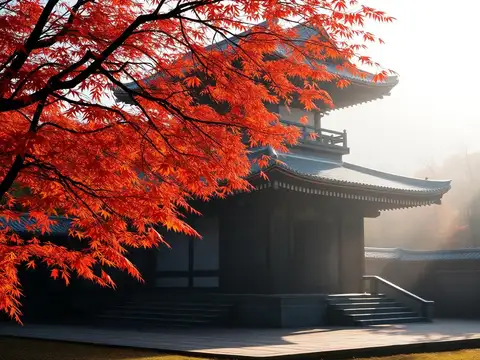
Spring (late March and April, with the cherry blossom) and autumn (October and November, with the maples) are the best times, and also the busiest. The rainy season runs from early June to mid-July, July and August are hot and humid, and August and September are the peak of the typhoon season. If you can, avoid Golden Week (late April, early May) and Obon (mid-August), when the Japanese travel too.
A first 10-14 day route
- Tokyo, 4 nights.
- Hakone, 1-2 nights, for a ryokan with an onsen and Mount Fuji when the sky is clear. Alternatively, a detour to the Japanese Alps, with Takayama and Kanazawa.
- Kyoto, 4 nights, with a day trip to Nara.
- Hiroshima and Miyajima, 1-2 nights. From Kyoto the Nozomi takes just over an hour and a half.
- Return: fly home from Osaka, or take the train back to Tokyo, just over two hours from Kyoto.
One tip: from Tokyo, send your suitcase straight to your Kyoto hotel and take only a backpack to Hakone for the night.
Want a trip built like this? Tell us about it on a free call.
The Dream Destination editorial team