Layers, boots and a few practical details for the wind, the sun and the southern trails.
In Patagonia you can go from sunshine to wind-driven sideways rain within an hour, even in January. You do not need a huge suitcase: you need the right pieces, chosen to work together. Here is what to bring, what to leave at home and a few practical details on money, plugs and laundries.
Three layers, no more
- Base layer in merino wool, long-sleeved: it stays warm when damp and lasts several days without smelling.
- Light mid layer: a fleece or a thin down jacket that packs small in your rucksack.
- Shell that is genuinely windproof and waterproof, with an adjustable hood.
Patagonian wind is not so much cold as relentless, and a jacket that stops it does more than any amount of extra padding. Add waterproof overtrousers on top of your hiking trousers. El Calafate has a semi-arid climate with little rain, but around Torres del Paine rain can come in any month of the year.
Wind: hands, head and neck
In Torres del Paine the wind is strongest between November and January, right in high season, and gusts can exceed 70 km/h. Bring light gloves and a beanie even in midsummer: early in the morning and on the passes the wind makes it feel much colder. A tubular neck gaiter protects you from wind and sun at the same time. A strap for your sunglasses and a hat that fastens under the chin save you chasing them down the trail.
Boots and feet
Boots you have already walked at least fifty kilometres in. The first days of a trek are not the time to find out where they rub. Waterproof is better, with a sole that grips on rock and mud. Bring wool socks and always keep a spare pair in your day pack. Blister plasters belong in your day pack, not in your suitcase. For the evening, a pair of light, comfortable shoes is enough.
The day pack
- a 20 or 30-litre rucksack with a rain cover or a dry bag inside
- shell and mid layer, even if you set off in sunshine
- gloves, beanie and neck gaiter
- sunscreen, lip balm with SPF and sunglasses
- a water bottle of at least one litre and something to eat
- blister plasters and a small first-aid kit
- a head torch if you start before dawn
- a bag to carry your rubbish back out
The sun
Sun protection matters more than you think. This far south the ozone layer is thin: in spring the ozone hole over Antarctica sometimes stretches as far as the southern tip of the continent. On top of that, light reflected off ice and lakes is strong. High-factor sunscreen, a brimmed hat and good-quality sunglasses (category 3 or 4) are essential. Add a sleep mask: in January there are about 17 hours of daylight.
Wardrobe, laundries and the border
One pair of trousers you do not mind ruining and one you would happily wear to dinner. That is the whole wardrobe. In El Calafate and Puerto Natales there are laundries that wash by weight and often return your clothes the same day: washing costs less than paying for excess baggage.
If you cross from Argentina into Chile, for example from El Calafate to Puerto Natales, do not carry fresh fruit, meat, cured meats, cheese, eggs or honey. Border checks are strict and fines are high. Always declare any food you have with you.
Money, plugs and photography
In Argentina, exchange rates and payment rules have changed often in recent years: before you leave, ask your bank about the best way to pay. In general, bring two cards on different networks and some cash for small expenses. Argentine cash machines only dispense pesos and can charge high fees per withdrawal; in El Chaltén they can run out of cash, so withdraw beforehand. In Chile cards work well in towns and you pay in Chilean pesos.
Plugs: Chile uses types C and L, the same as in Italy. Argentina's official socket is type I, with flat pins in a V shape: you will need an adapter. A universal adapter covers both countries.
For photography, leave the tripod at home unless you plan to shoot the night sky: the wind almost always wins. A polarising filter, on the other hand, will be useful every day on the glaciers. Bring a spare battery, a cloth to wipe spray off the lens and a dry bag for the camera.
Best time
- November to March: the main season. January and February are the warmest and busiest months.
- November and December: long days and fewer people than in midsummer, but the wind is often very strong.
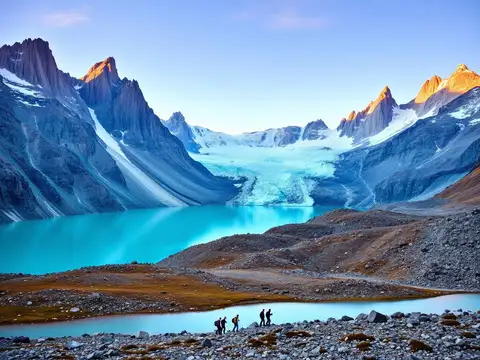
- Late March to April: the trails empty out and the lenga forests turn red and gold. Days get shorter, these are among the wettest months in Torres del Paine and some lodges close for the season.
Want a trip built like this? Tell us about it on a free call.
The Dream Destination editorial team